01Robotics & Coding
VEX Robotics
Educational robotics from entry level to advanced systems, using VEXcode, STEM Labs and hands-on challenges.
- Blocks, Python & C++
- STEM Labs & engineering
- Clubs and competitions
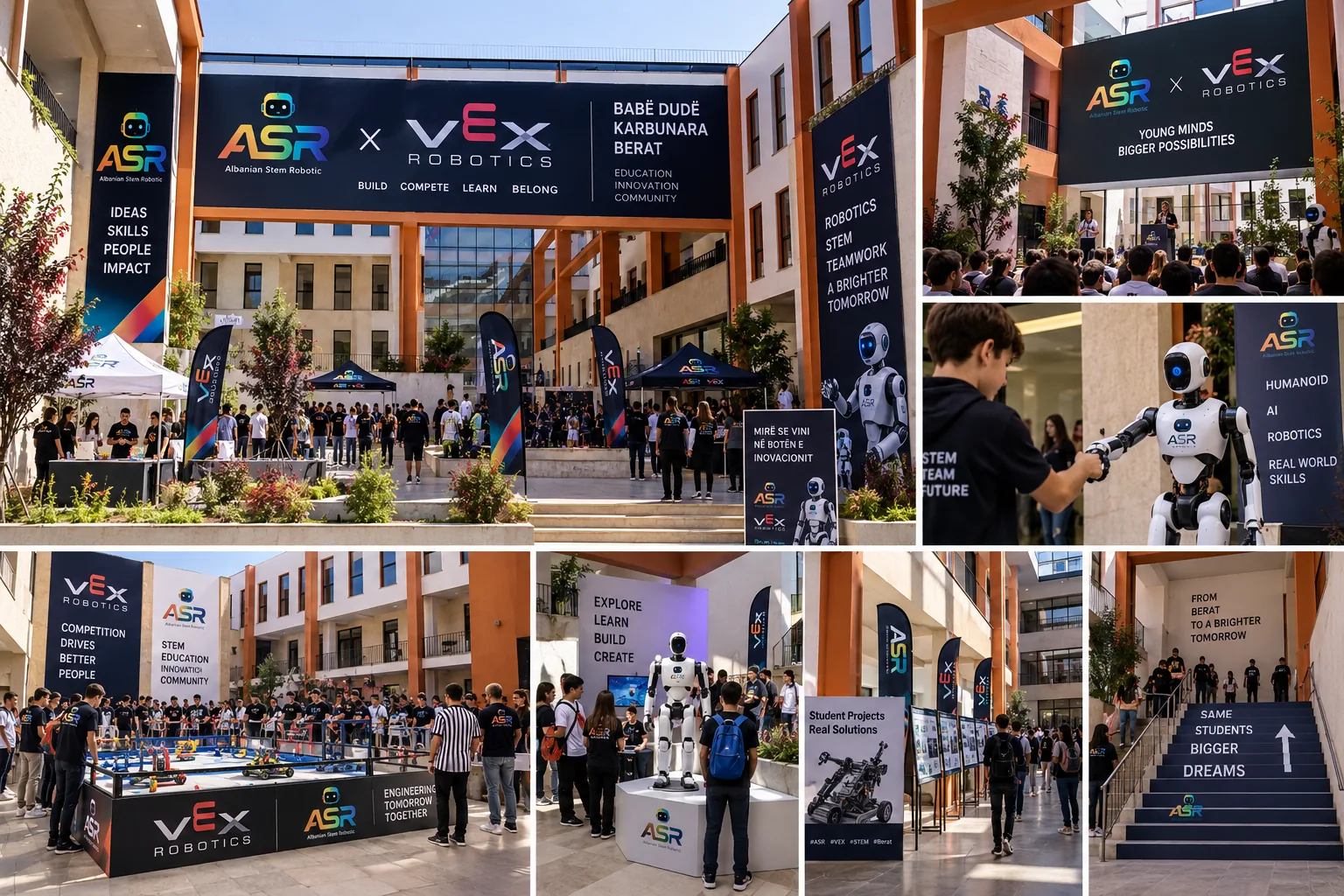
VEX IN ACTION
ASR builds a complete pathway from curiosity to competence: robotics, programming, artificial intelligence, cybersecurity and humanoid robotics — through real projects, labs and challenges.
ASR connects educational robotics, creative AI, cybersecurity and humanoid platforms into a structured pathway for students, educators and institutions.
Educational robotics from entry level to advanced systems, using VEXcode, STEM Labs and hands-on challenges.
Progress from educational robot coding to humanoids, simulation, SDKs and embodied AI experimentation.
Hands-on IT and GenAI workshops that turn ideas into projects: animation, apps, web, data and digital creativity.
A K–12 cybersecurity curriculum reference focused on computer systems, digital citizenship and security.
 VEX Robotics
 Booster Tech
 Eden-Well
 CybersecurityVEX RoboticsBooster TechEden-WellCybersecurity
From first mechanisms and basic logic to coding, competitions, AI and advanced automation.
Logic, sequences, stories and screen-free robotics designed to spark technological curiosity. Children work through playful activities, simple models and first steps in algorithmic thinking, coordination and teamwork.
STEM, mechanisms, building, collaboration and testing through tangible projects. Students explore force, motion, gears, structures and problem solving by physically building and testing their projects.
Sensors, algorithms, Blocks/Python and challenges that connect code with robot behavior. Students progress from basic commands to conditionals, loops, debugging and performance optimization in real tasks.
Engineering notebook, autonomous operation, driver skills, strategy and teamwork in a competitive format. The program is structured as a complete competition experience where roles, discipline, technical documentation and decision-making under pressure become part of student development.
GenAI, no-code applications, animation, 3D and data — from a prompt to a presentable product. The focus is practical creation: content, prototypes, mini-apps, visual presentations and ethical AI use in educational settings.
Automation, workcells, humanoid robotics, embedded systems and industry-related skills. This level is designed for advanced learners moving from educational robotics toward more professional systems and industry-adjacent scenarios.
Programs can be delivered as semester courses, after-school clubs, in-school labs, camps, intensive workshops or competition teams. This allows ASR to adapt to both institutions and individual students.
Every learning cycle produces something tangible: a physical model, working code, testing, a technical notebook, a presentation, a mini-app or a public demonstration. Progress becomes visible and documentable.
The pathway is progressive. Students move to more advanced modules after demonstrating participation, technical understanding, project maturity and collaboration skills. Institutions can structure this as a multi-year pathway.
Build command sequences and watch the humanoids and VEX robots move, pick up blocks, build and react to your instructions.
robot command value;
Robots: human-a, human-b, vex-iq, vex-v5
Commands: forward, back, left, right, pick, drop, build, wave, dance, look, jump
The ASR methodology turns every cycle into visible evidence of progress: a model, a program, a solution, a demonstration or a presentation.
ASR can structure the lab, program, educator training and the way progress is documented.
Age-based pathways, learning objectives, projects, assessment rubrics and classroom materials.
Lab configuration, robotics, AI and technical tools matched to the institution’s capacity and level.
Onboarding, hands-on practice, classroom management, safety, learning workflow and professional development.
Team structures, roles, engineering notebooks, events, demo days and challenges that increase motivation.
Project portfolios, participation, competencies, feedback and clear evidence for schools and parents.
Standardization, program maintenance, updated materials and gradual expansion of technical depth.
It is a more structured way to think, create, collaborate and present solutions.
ASR does not operate as an isolated course. We organize registration, program placement, hands-on learning, project evidence, reporting and progression to more advanced levels.
The institution or student applies with basic information. Age, level, goals, technical capacity and area of interest are identified.
ASR recommends the most suitable pathway: robotics, coding, AI, cybersecurity, humanoid robotics or a modular combination.
Groups, schedule, educator, equipment, lab rules and learning-cycle objectives are defined.
Each module moves from concept to building, coding, testing and improvement. The student creates concrete evidence of learning.
Participation, projects, competencies, feedback and results are recorded, creating a clear portfolio for the student and institution.
At the end of the cycle, progress is summarized and the next step is recommended: a new module, advanced level, competition team or special project.
Complete the application for an institution or individual student and the ASR team will contact you about the next steps.